Your UGC Portfolio: You Need 5 Videos Before Any Brand Will Pay You
 Mohit Kumar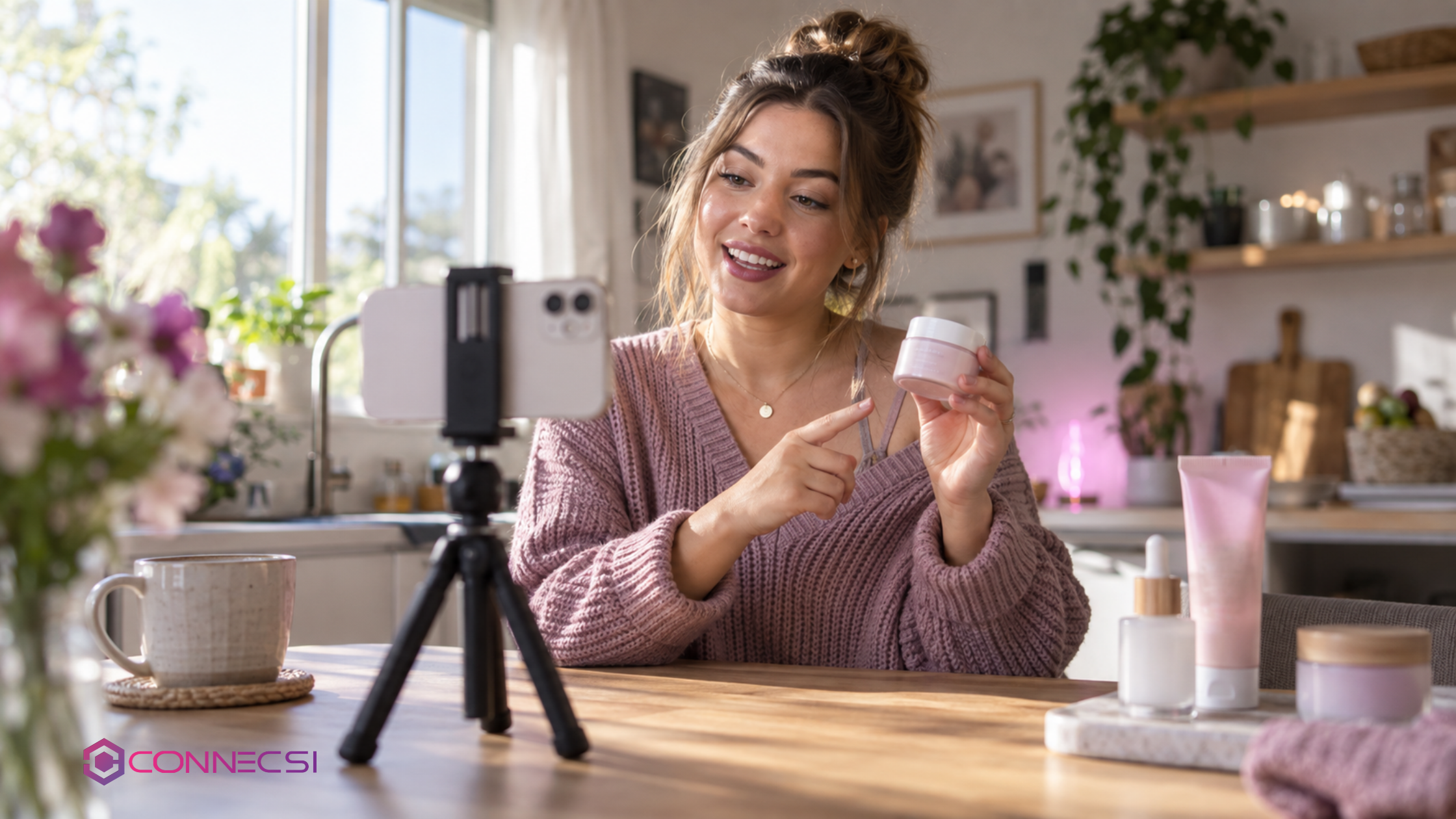
Here's the part nobody tells you when you decide to become a UGC creator. Brands don't hire you because you say you can make content. They hire you because they watched something you made and thought, that would work for us. Which means the thing standing between you and your first paid deal isn't a follower count, a niche, or a perfect bio. It's a UGC portfolio with actual work in it.
Most new creators get this backwards. They spend weeks setting up profiles, researching rates and drafting pitch emails, then send 30 messages with nothing to show except enthusiasm. The replies don't come, and the conclusion they draw is that the market is saturated. The market isn't saturated. They just asked to be paid before showing anyone what they'd be paying for.
The good news is that the bar is lower than it looks. You don't need a client list, testimonials or a studio. You need roughly five pieces of self-made work that prove you can hold a product, speak to a camera and edit something watchable. That's a weekend of effort, and it changes every conversation you have afterwards.
Build your UGC portfolio with products you already own. Brands are judging whether you can make content, not whether you were hired to make it. Nothing in a sample has to be a paid job, and nobody will ask.
Why Brands Need to See Work First
Understand what a brand is risking and the requirement makes sense. They're paying up front for content they haven't seen, which they then plan to put behind paid ad spend. If it's unusable, they've lost the fee and the slot in their content calendar. Your samples are the only thing that lowers that risk.
And the demand is real. Creator-made content now sits at the centre of how brands sell: Shopify's roundup of UGC research cites Bazaarvoice data showing 86% of shoppers engage with creator content before buying, and an Emplifi benchmark finding that posts featuring UGC drove more than 10 times higher conversion rates than posts without it. Shopify also cites a Collabstr report showing the UGC creator workforce grew 93% year over year, with UGC campaigns now making up 15% of all influencer collaborations.
Read those two facts together and the opportunity is obvious. Brands need a constant supply of this content, more creators are arriving to supply it, and the ones who get picked are simply the ones whose work is visible. A portfolio isn't a formality in that market. It's the whole application.
The Five Videos to Make First
Five is the starting line because it's the smallest set that demonstrates range rather than a single lucky shot. Each one should do a different job, so a brand watching all five sees a creator who can handle whatever brief they have.
| Video | What it proves | Rough length |
|---|---|---|
| Unboxing or first impression | You can build anticipation and show a product clearly | 20 to 30 seconds |
| Talking-head testimonial | You're comfortable on camera and sound believable | 30 to 45 seconds |
| Problem and solution | You can sell a benefit, not just describe a thing | 30 seconds |
| Voiceover with product shots | You can edit, and you work when you're off camera | 15 to 30 seconds |
| How-to or routine | You can show a product in real use | 30 to 60 seconds |
Shoot all five vertically, at 9:16, because that's where this content runs and because the platforms ask for it directly. TikTok's own creative guidance for advertisers tells brands to "shoot vertical, and frame your content 9:16" in at least 720p, to open with a hook that uses suspense, surprise or emotion, and notes that ads with sound drive meaningful lifts in purchase intent. Matching those rules in your samples signals that your content can be used as an ad without being re-cut.
Beyond format, the production advice is unglamorous. Use daylight near a window rather than buying lights. Record in a quiet room, because bad audio reads as amateur faster than imperfect video does. Wipe the lens, since phone cameras collect fingerprints and a hazy shot looks cheap for no reason. Film a few extra seconds at the start and end of each take so you have room to trim. And pick products from one or two categories you actually use, because a focused set of samples reads as a specialist while a scattered set reads as a hobbyist.
One warning worth taking seriously: don't make all five about the same product. A brand needs to see you adapt, and five videos about the same moisturiser only prove you can make one video five times.
What Makes a Sample Unusable
Knowing what gets a portfolio closed early saves more time than any gear upgrade. The most common problem is a product that can't be seen properly: held below the frame, lit from behind, or waved past the camera too fast to register. If a viewer can't tell what's being sold, nothing else in the video matters.
The second is a slow start. A sample that spends five seconds on an intro has already lost the audience it was made for, and a brand watching it knows that. The third is audio that forces someone to lean in, usually from filming in a large echoing room or outdoors in wind. The fourth is a visible competitor: a rival brand's packaging in the background of a shot makes a sample unusable for the brand you're pitching, however good the rest of it is.
Finally, watch the obvious ones. Clean the surface you shoot on, clear the clutter behind you, and don't include anyone who hasn't agreed to appear. None of this takes skill. It just takes a second look before you upload.
What Brands Judge When They Watch
They're not looking for cinematic quality. They're checking a short list of practical things, and most of them are within your control on day one.
Can they hear and see the product clearly? Does the hook land in the first two seconds, before a viewer scrolls past? Does the content look like it belongs on the platform rather than like a TV ad? Are you believable, or are you reading a script? And does your work sit near their category, since a brand selling skincare would rather see one decent skincare video than ten polished clips about gaming chairs.
Guides on the subject agree on what matters. Influencer Marketing Hub's portfolio guide lists niche alignment, content quality and creative versatility, professional presentation and brand-safety signals as the things decision-makers scan for, and recommends showing your strongest 6 to 12 examples once you have them. That's the target to grow into. Five gets you pitching; the rest accumulate as you work.
Where to Host Your UGC Portfolio
A portfolio only works if a brand can open it in one tap on a phone. The format matters less than the friction. A simple one-page website with a custom domain reads as most professional, and as Wix's guide to UGC portfolios puts it, that "adds a layer of professionalism that sets you apart from creators sending Google Drive links."
If you'd rather not build a site yet, a well-organised shared folder or a dedicated social account used purely as a showcase will do. What's not acceptable is a pile of unlabelled files, or asking a brand to scroll your personal profile to find examples. Whatever you choose, include a short line on each video saying what it is and what product category it fits, add one sentence about your niche, and make your contact details obvious. A media kit does the same job in a tidier package, and our media kit template gives you the structure.
Then Get Paid for It
With five samples in hand, the conversation changes from asking for a chance to offering a service, and that changes what you can charge. Brands that pay for UGC are buying usable ad creative, not exposure, so the price should reflect the work and the rights they're getting rather than the size of your following. Our guides to pricing your services and the ways creators actually make money cover the structures, and the outreach email templates give you something to send that isn't a cold "I'd love to collaborate".
One detail worth getting right from the first deal: be clear about what the brand is allowed to do with the video. Content used in an organic post, content run as a paid ad, and content licensed for a year across every market are three different products, and they shouldn't carry the same price. New creators routinely hand over unlimited use for a one-off fee, then watch their video run as an ad for months. Say in writing where the content can run and for how long, and treat anything beyond that as an extra line on the invoice. That one habit will earn you more over a year than better lighting will.
This is also where the earlier articles in this series connect. Getting paid without a following is possible precisely because the work is the product, and what brands actually check is the quality, fit and reliability your samples demonstrate. If you want a sense of what your account could earn before you start pitching, Aura Scan gives you a free earnings estimate for any real Instagram or YouTube account, with no login and no follower minimum, and the same approach applies if you're chasing brand deals as a nano creator.
- Brands hire from work they can watch, so a UGC portfolio matters more than followers, niche or bio copy.
- Five samples is the realistic minimum: unboxing, testimonial, problem and solution, voiceover, and how-to.
- Use products you already own; nothing in your samples needs to be a paid job.
- Shoot vertical at 9:16, use window light, and prioritise clean audio over expensive gear.
- Brands scan for a fast hook, clear product visibility, believability and category fit, not cinematic quality.
- Keep the portfolio one tap away on a phone, and grow it toward 6 to 12 strong examples as you work.
The Bottom Line
The reason most new UGC creators stall isn't competition or saturation. It's that they're asking brands to imagine what they could do instead of showing them. Five videos removes that problem permanently, and you can make them this weekend with products already in your flat.
Realistically this is a weekend, not a project. An afternoon to shoot, an evening to edit, an hour to put the page together. Set against the weeks most new creators lose to pitching with nothing attached, it's the cheapest investment available to you.
Shoot the five, put them somewhere a brand can open on a phone, then start pitching with a link instead of a promise. Up next in this series: the pricing mistake that quietly costs new creators hundreds of dollars on their first few deals.
Editorial note: Brand names, logos and trademarks referenced in this article belong to their respective owners. Connecsi is not affiliated with or endorsed by the brands, creators or individuals discussed unless explicitly stated otherwise. References are made for editorial, educational, analytical and commentary purposes. Figures are drawn from the publicly reported sources linked above as of October 2026. Featured image is an original editorial illustration created for Connecsi.
More insights for you.
What Your Favorite Creators Actually Earn: Inside the Highest Paid Creators of 2026
MrBeast made $300M. Another creator made $31M from just 10 million followers. Here's what the top 10 actually sell, and the do's and don'ts to borrow.

Influencer Marketing Attribution: Why You Still Can't Prove What Worked
Your finance lead asks which sales came from creators. Most brands can't answer. Here's why the tracking breaks, and the stack that actually holds up.

The Fake Followers Trap: Why That Percentage Won't Protect Your Budget
That fake-follower percentage looks like proof. It's only a sample, it shifts between tools, and it still won't tell you what a creator is actually worth.
Fresh insights.
Straight to your inbox.
- Creator partnerships
- Campaign guidance
- Industry insights