Micro Influencer Pricing: What to Expect in 2026
 Mohit Kumar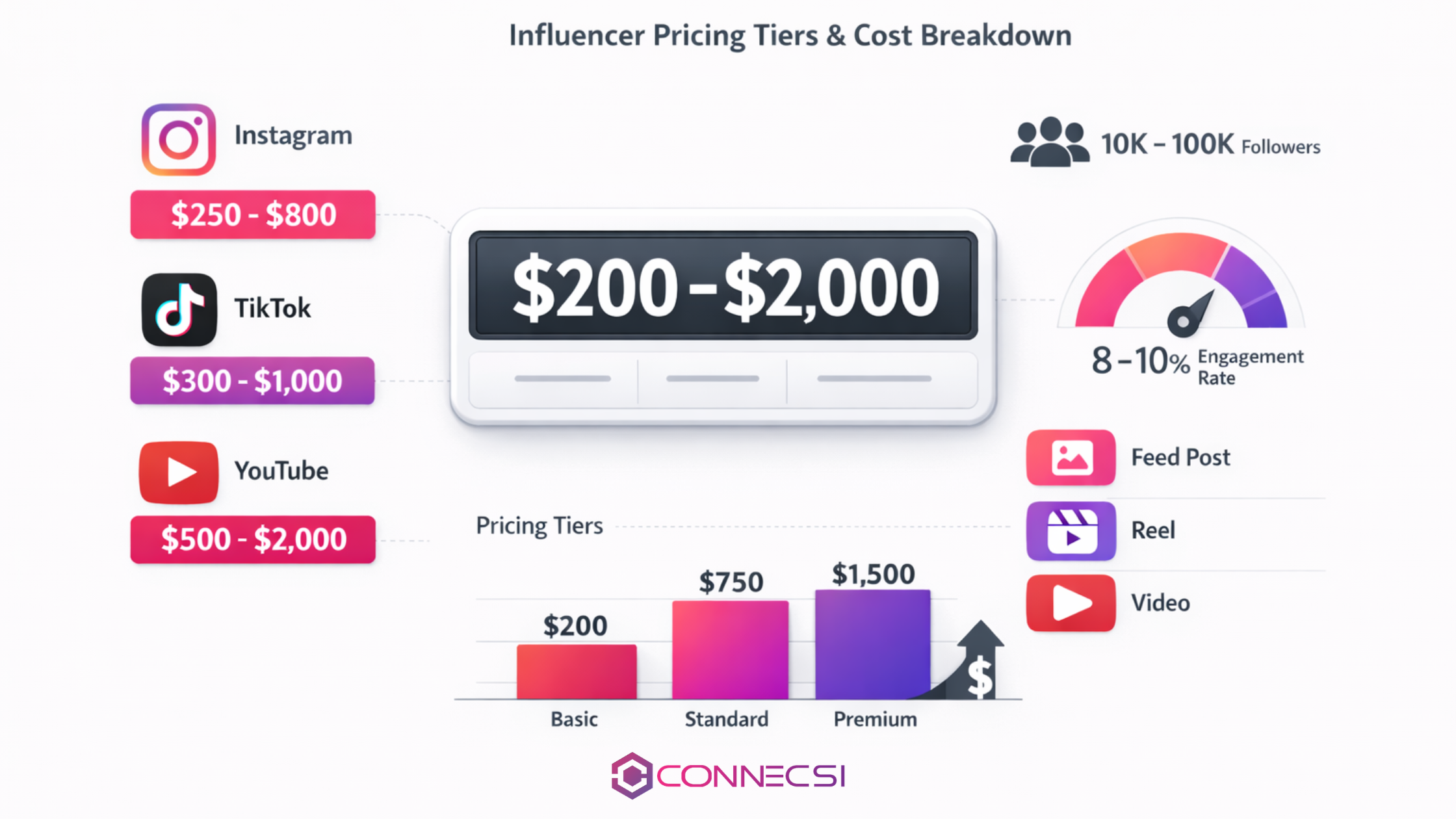
On this page
- Introduction
- Pro Tip
- Average Micro Influencer Pricing by Platform (2026)
- Factors That Influence Micro Influencer Pricing
- Payment Structure Options Beyond Flat Fees
- How to Negotiate Micro Influencer Pricing
- Regional and Geographic Pricing Variations
- Industry-Specific Pricing Benchmarks
- Budget Planning: What Should You Spend?
- Common Pricing Mistakes to Avoid
- Key Takeaways
- Conclusion
Understanding micro influencer pricing is one of the most common challenges brands face when launching influencer marketing campaigns. Should you pay $200 per post or $2,000? Is product gifting enough, or do creators expect cash compensation? What factors drive pricing differences between influencers with similar follower counts? In 2026, the influencer pricing landscape has matured with clearer market standards, yet significant variability remains based on platform, niche, engagement quality, and content requirements.
According to Statista's influencer pricing research, micro influencer rates have increased by 23% since 2023 as brands recognize the superior ROI these creators deliver compared to macro influencers. However, micro influencers remain highly cost-effective, with average campaign costs ranging from $500 to $2,500 per collaboration—a fraction of the $10,000 to $50,000 that macro influencers command.
This comprehensive guide breaks down everything you need to know about micro influencer pricing in 2026: typical rate ranges by platform, factors that influence costs, payment structure options, negotiation strategies, and budget planning frameworks. Whether you're allocating your first influencer marketing budget or optimizing spend across multiple campaigns, understanding pricing dynamics ensures you compensate creators fairly while maximizing campaign ROI.
💡 PRO TIP: Micro influencer pricing varies dramatically by industry. Beauty and fashion creators typically charge 30-50% more than general lifestyle influencers due to high production costs and specialized expertise. Always research niche-specific benchmarks rather than relying on generic industry averages when budgeting your campaigns.
Average Micro Influencer Pricing by Platform (2026)
Different social media platforms command different pricing structures based on content complexity, audience engagement patterns, and platform-specific ROI potential.
Instagram Pricing
Instagram remains the most popular platform for micro influencer partnerships, with clear pricing tiers based on content type and follower count. Research from Later's Instagram pricing analysis shows that micro influencers with 10,000-50,000 followers typically charge $200-$800 per static feed post, $150-$600 per Reel, and $100-$300 per Story set (3-5 slides).
Creators with 50,000-100,000 followers command higher rates: $800-$2,000 per feed post, $600-$1,500 per Reel, and $300-$800 per Story set. These ranges reflect market averages; exceptional creators with highly engaged niche audiences may charge 20-40% above these benchmarks.
Instagram carousel posts (multiple images) typically cost the same as single feed posts unless the creator must produce unique content for each slide, which may add $50-$150 to the base rate. Instagram Live sessions or takeovers generally range from $500-$1,500 depending on duration and promotional requirements.
TikTok Pricing
TikTok pricing has evolved as the platform matured from trending-focused virality to sustained creator partnerships. Micro influencers on TikTok with 10,000-50,000 followers typically charge $150-$600 per video, while those with 50,000-100,000 followers command $600-$1,500 per video.
TikTok videos require less production polish than Instagram content but demand strong creative conceptualization and trend awareness. Creators who consistently achieve high view counts relative to their follower base (indicating strong algorithmic favor) can charge premium rates 25-35% above average. According to Hootsuite's TikTok marketing insights, sound licensing and trending audio integration don't typically affect pricing since these are platform-native features.
YouTube Pricing
YouTube commands the highest micro influencer rates due to longer production timelines, editing complexity, and extended content shelf life. Micro influencers with 10,000-50,000 subscribers charge $500-$1,500 for dedicated videos and $200-$800 for integrated sponsorships (mentions within larger content). Those with 50,000-100,000 subscribers typically charge $1,500-$3,000 for dedicated content and $800-$1,500 for integrations.
YouTube Shorts pricing mirrors TikTok rates ($150-$600 for micro tier), but brands increasingly request YouTube Shorts as add-ons to main video sponsorships rather than standalone deliverables. Video length significantly impacts pricing—a 60-second integration costs far less than a 10-minute dedicated review.
LinkedIn and Twitter/X Pricing
B2B micro influencers on LinkedIn with 10,000-100,000 followers command $300-$1,200 per sponsored post or article, with thought leaders in specialized industries (enterprise software, finance, healthcare) charging at the higher end. Twitter/X pricing for micro influencers ranges from $100-$500 per sponsored tweet thread, though this platform sees less formal influencer marketing activity than visual-first platforms.
| Platform | 10K-50K Followers | 50K-100K Followers | Content Type |
|---|---|---|---|
| $200-$800 | $800-$2,000 | Feed Post | |
| $150-$600 | $600-$1,500 | Reel | |
| TikTok | $150-$600 | $600-$1,500 | Video |
| YouTube | $500-$1,500 | $1,500-$3,000 | Dedicated Video |
| $300-$800 | $800-$1,200 | Sponsored Post |
Factors That Influence Micro Influencer Pricing
Beyond follower count and platform, numerous variables affect what micro influencers charge for partnerships.
Engagement Rate and Audience Quality
Engagement rate is the single most important pricing factor after follower count. A creator with 30,000 followers and 12% engagement rate can legitimately charge more than someone with 80,000 followers and 2% engagement because their audience actively engages with content. Brands pay for attention and action, not passive scroll-past impressions.
Audience demographics also impact pricing. Creators whose followers match premium target audiences—high-income earners, decision-makers, or specific age demographics—command higher rates. A parenting influencer whose audience is 80% mothers aged 28-40 with household incomes above $100,000 charges more than a general lifestyle creator with similar follower count but broader, less qualified audience.
Content Production Requirements
Simple product mention posts cost less than elaborate content productions. If you require professional photography, specific locations, props, models, or extensive editing, expect to pay 30-100% above standard rates. Usage rights amplification (repurposing creator content in your own ads, website, or marketing materials) typically adds 25-50% to base pricing, with exclusive rights commanding even higher premiums.
Timeline urgency affects pricing as well. Rush requests with less than one week turnaround may incur 20-30% rush fees. Conversely, creators offering longer-term partnerships (6-12 month ambassadorships) often provide volume discounts of 15-25% compared to one-off post pricing.
Creator Experience and Track Record
Established micro influencers with proven campaign performance history charge more than newcomers with similar follower counts. A creator who can show previous brand partnerships drove $50,000 in tracked sales justifies higher rates than someone without performance documentation. Portfolio quality, professionalism in communication, and content consistency also support premium pricing.
Niche Specialization and Expertise
Highly specialized niches command premium rates. Finance creators explaining complex investment concepts, medical professionals discussing health topics with clinical accuracy, or tech experts reviewing enterprise software bring expertise that justifies higher compensation. Beauty, fashion, fitness, and travel—while popular—have more creator supply, creating downward pricing pressure compared to specialized B2B or technical niches.
Understanding what defines micro influencer value helps contextualize why certain creators charge more than follower count alone would suggest. Their niche authority and audience trust translate directly to higher conversion potential.
Payment Structure Options Beyond Flat Fees
While flat per-post fees remain most common, alternative compensation structures offer flexibility for both brands and creators.
Product Gifting and Barter Arrangements
Product-only compensation works for micro influencers just building portfolios, but established creators typically decline gifting-only offers unless product value exceeds $200-$300 or they genuinely want the product for personal use. Research from Social Media Today's creator marketing report notes that established micro influencers increasingly expect monetary compensation beyond free products, especially as their audiences grow.
Hybrid models—reduced cash fee plus product—work well for high-value items. A $400 cash payment plus $600 product value creates a $1,000 total compensation package that feels generous while managing cash budgets.
Commission and Affiliate Structures
Performance-based compensation through affiliate links or commission structures appeals to results-driven brands and confident creators. Typical commission rates range from 10-30% of sales, with higher rates for premium products or exclusive partnerships. Many successful arrangements combine base payment ($300-$500) plus commission, ensuring creators receive guaranteed compensation while incentivizing strong promotion.
Affiliate arrangements work best for products with clear purchase paths and trackable conversions. Complex B2B services or long sales cycles make attribution difficult, reducing creator interest in commission-only deals.
Long-Term Ambassadorships
Ambassador programs spanning 3-12 months provide budget predictability and deeper creator relationships. Monthly retainers for micro influencers typically range from $500-$2,500 depending on required deliverables (usually 2-4 posts monthly plus ongoing brand advocacy). These arrangements often include performance bonuses, exclusive discount codes for creator audiences, and first access to new products.
Long-term partnerships reduce effective per-post costs while ensuring consistent brand presence. A $1,500 monthly retainer for 4 posts equals $375 per post—significantly below one-off rates. For guidance on structuring these relationships, explore our resource on finding and vetting micro influencer partners.
How to Negotiate Micro Influencer Pricing
Professional negotiation respects creator expertise while achieving budget alignment.
Research Market Rates First
Enter negotiations informed about typical rates for the creator's platform, follower tier, and niche. Lowball offers 50% below market rates damage relationships and signal you don't value creator work. Reasonable offers within 15-20% of expected rates allow productive negotiation.
Emphasize Mutual Value Beyond Payment
Highlight what makes your brand partnership appealing: high-quality products creators genuinely want, creative freedom in content approach, exposure to your brand's audience, potential for long-term relationship, or opportunities for exclusive experiences. These factors don't replace fair payment but can make slightly lower rates acceptable when combined with strong non-monetary value.
Bundle Deliverables for Better Rates
Requesting multiple deliverables together often yields 10-20% discounts compared to individual pricing. Asking for one Instagram feed post, one Reel, and three Stories as a package typically costs less than purchasing each separately. Creators appreciate batched work that's efficient to produce in single sessions.
Offer Performance Incentives
Bonus structures tied to measurable outcomes align creator and brand interests. Offering base payment plus bonuses for hitting engagement benchmarks ($200 bonus if post achieves 10%+ engagement), traffic targets ($300 bonus for 500+ website clicks), or sales milestones ($500 bonus for $5,000 in tracked sales) motivates strong creator performance while managing budget risk.
Be Transparent About Budget Constraints
If you genuinely have limited budget, communicate this respectfully. Some creators are open to working within smaller budgets if they love the brand, see strategic value in the partnership, or want portfolio-building experience. However, expecting free or severely underpaid work because you're a "small business" or offering "exposure" is unprofessional. If you can't afford current market rates, consider working with nano influencers, offering strong product value, or focusing on organic community building until budget allows proper creator compensation.
Regional and Geographic Pricing Variations
Creator location significantly impacts pricing expectations, though social media's global nature has reduced geographic disparities compared to traditional media.
Micro influencers in major U.S. markets (New York, Los Angeles, Miami) typically charge 20-30% above national averages due to higher cost of living and concentrated brand demand. Creators in smaller markets or international locations may charge 15-25% below U.S. averages, though this gap has narrowed as influencer marketing professionalized globally.
Currency considerations matter for international partnerships. Always clarify whether quoted rates are in USD, EUR, GBP, or local currency. Payment methods also vary—some countries have limited PayPal access, requiring alternatives like direct bank transfer, Wise, or Payoneer.
Industry-Specific Pricing Benchmarks
Certain verticals consistently see higher or lower pricing than cross-industry averages.
High-Price Industries
Beauty and skincare influencers charge premium rates due to content production costs, specialized knowledge requirements, and high brand demand. Finance and investment creators command high rates reflecting their expertise and regulated content requirements. Technology reviewers, especially in B2B software, charge premium rates for technical accuracy and niche audience value.
Standard-Price Industries
Fashion, fitness, food, and general lifestyle creators operate near market average rates with pricing determined primarily by engagement and follower count rather than niche premiums.
Lower-Price Industries
Gaming, meme, and entertainment-focused creators sometimes charge below-average rates due to high creator supply and younger audience demographics (lower purchasing power). However, top performers in these niches still command standard market rates.
Premium Niche Examples
Sustainable/ethical products, luxury goods, and professional services (legal, medical, financial) often see 25-40% pricing premiums as creators in these spaces tend toward older, higher-income audiences with strong purchase intent.
Budget Planning: What Should You Spend?
Most brands allocate 10-25% of total marketing budget to influencer partnerships, with digital-first brands often investing higher percentages. For initial campaigns, budget for 5-10 micro influencer partnerships to test different creators, content approaches, and audience segments before scaling.
A realistic starting budget for comprehensive micro influencer campaign:
Small Budget ($2,000-$5,000): 3-5 micro influencers, single platform (Instagram or TikTok), basic deliverables, short-term campaign.
Medium Budget ($5,000-$15,000): 8-12 micro influencers, multi-platform presence, mix of feed posts and video content, 2-3 month campaign duration.
Large Budget ($15,000-$50,000): 15-25 micro influencers, comprehensive multi-platform strategy, premium content production, 3-6 month ambassador programs, performance tracking infrastructure.
Remember that creator fees are only part of total costs. Budget also for product seeding, content usage rights, influencer management tools or agencies, performance tracking platforms, and internal team time for campaign management. According to Influencer Marketing Hub's benchmark data, creator fees are typically the largest single line item, though additional costs — usage rights, product seeding, tracking tools, and team time — can add substantially to the total campaign budget.
For strategic context on why these investments deliver results, review our analysis of why leading brands prioritize micro influencer partnerships.
Common Pricing Mistakes to Avoid
Understanding what not to do prevents costly errors and damaged creator relationships.
Assuming follower count alone determines pricing: Two creators with identical 50,000 followers may have vastly different pricing based on engagement, niche, content quality, and audience demographics. Evaluate the complete picture, not just vanity metrics.
Requesting extensive usage rights without compensation: If you want to repurpose creator content in paid ads, website hero images, or email campaigns, expect to pay 25-100% above base rates depending on usage scope and duration. Don't assume content ownership without explicit negotiation.
Delaying payment or creating complex payment processes: Pay creators promptly according to agreed terms—ideally within 7-14 days of content delivery. Lengthy payment delays or requiring extensive invoicing bureaucracy damages relationships and may result in creators declining future partnerships.
Offering exposure as primary compensation: "We can't pay you, but think of the exposure!" is the fastest way to be dismissed by professional creators. Exposure doesn't pay bills. If your brand genuinely offers valuable audience access or career advancement opportunities, these enhance paid partnerships—they don't replace fair compensation.
Ignoring content revision limits: Clearly define how many revision rounds are included in pricing (typically 1-2 rounds). Requesting 5-6 revisions without additional payment is unprofessional and disrespects creator time.
- Micro influencer pricing in 2026 ranges from $200-$2,000 per post depending on platform, follower count (10K-100K), engagement rate, niche specialization, and content complexity
- Instagram posts cost $200-$800 for 10K-50K followers and $800-$2,000 for 50K-100K followers, while YouTube commands highest rates at $500-$3,000 due to production complexity
- Engagement rate and audience quality matter more than follower count—a creator with 30,000 highly engaged followers can charge more than someone with 80,000 passive followers
- Alternative payment structures include product gifting (works for new creators), commission-based models (10-30% typical rates), and long-term ambassadorships ($500-$2,500 monthly retainers)
- Budget 10-25% of total marketing spend for influencer partnerships, with starting campaigns requiring $2,000-$5,000 for 3-5 quality micro influencer collaborations
- Avoid common mistakes: undervaluing creator work, requesting extensive usage rights without compensation, delaying payment, offering only exposure, and demanding unlimited revisions without additional fees
Conclusion
Micro influencer pricing has matured into a professional marketplace with clear benchmarks while maintaining flexibility for various budget levels and partnership structures. The $200-$2,000 typical range for micro influencer collaborations represents exceptional value compared to traditional advertising costs, celebrity endorsements, or macro influencer rates—especially when you consider the authentic engagement and measurable conversions these partnerships deliver.
Success in influencer marketing isn't about finding the cheapest creators or negotiating rock-bottom rates. It's about identifying creators whose audiences align perfectly with your brand, compensating them fairly for their expertise and reach, and building mutually beneficial relationships that drive real business results. The brands seeing strongest ROI in 2026 understand that investing appropriately in quality creator partnerships yields far better outcomes than spreading minimal budgets across many poorly matched influencers.
Approach pricing conversations with transparency, respect for creator professionalism, and focus on mutual value creation. When you compensate creators fairly and treat partnerships as true collaborations, you unlock the authentic advocacy and creative excellence that makes micro influencer marketing one of the highest-ROI channels available to modern brands.
Ready to build cost-effective micro influencer campaigns that deliver measurable results? Connecsi's platform provides transparent pricing insights, vetted creator recommendations, and partnership management tools that help you maximize influencer marketing ROI while respecting creator value.
More insights for you.
What Your Favorite Creators Actually Earn: Inside the Highest Paid Creators of 2026
MrBeast made $300M. Another creator made $31M from just 10 million followers. Here's what the top 10 actually sell, and the do's and don'ts to borrow.

Your UGC Portfolio: You Need 5 Videos Before Any Brand Will Pay You
Most new creators pitch with nothing attached and blame a saturated market. Five sample videos changes every conversation. Here's exactly what to shoot.

Influencer Marketing Attribution: Why You Still Can't Prove What Worked
Your finance lead asks which sales came from creators. Most brands can't answer. Here's why the tracking breaks, and the stack that actually holds up.
Fresh insights.
Straight to your inbox.
- Creator partnerships
- Campaign guidance
- Industry insights